
How to Build a Strong Resume That Gets Interviews

In today’s competitive job market, having a strong resume is one of the most important steps toward landing interviews and advancing your career. Whether you're a veteran transitioning into civilian work, a recent graduate, or an experienced professional, your resume needs to clearly communicate your value in just a few seconds.
A strong resume doesn’t just list your past roles, it tells a clear story of your impact, skills, and potential. In this guide, we’ll break down exactly how to build a resume that gets noticed and moves you forward.

Why a Strong Resume Matters More Than Ever
Hiring managers often review dozens (sometimes hundreds) of resumes for a single role. Most resumes are scanned in under 10 seconds before a decision is made.
That means your strong resume needs to:
Be easy to read quickly
Highlight your most relevant experience
Show measurable results
Match the job description
If your resume is unclear or too generic, it may never make it past the first review — even if you’re qualified.
Focus on Results, Not Just Responsibilities
One of the biggest differences between an average resume and a strong resume
is how experience is presented.
Instead of listing duties, focus on outcomes.
Example: BEFORE: Managed a team responsible for daily operations AFTER: Led a team of 12 personnel to complete 80+ missions with zero safety incidents |
This approach shows leadership, accountability, and performance; qualities employers actively look for.
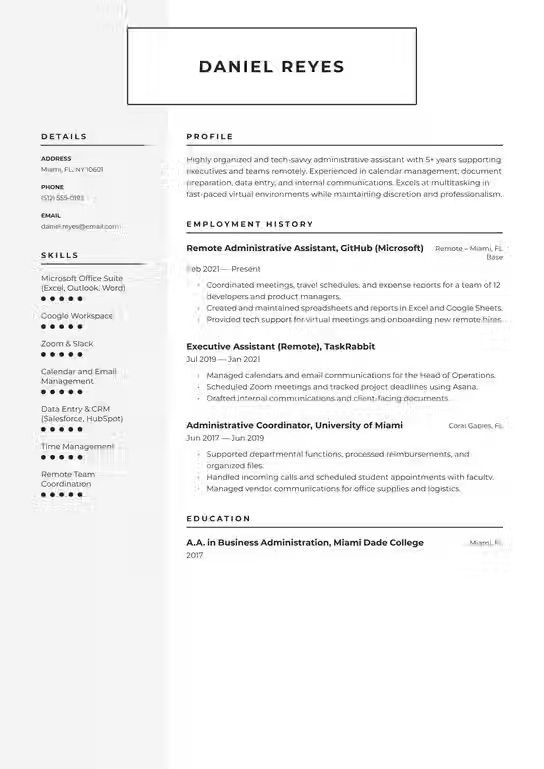
Use Clear, Professional Formatting
A strong resume is easy to scan. Clean formatting helps recruiters quickly identify your qualifications.
Best practices include:
Use bullet points instead of paragraphs
Keep sections clearly labeled (Experience, Skills, Education)
Use consistent spacing and font styles
Avoid clutter or overly complex designs
Simplicity improves readability and readability improves results.
Tailor Your Resume for Each Job
A one-size-fits-all resume is rarely effective. A strong resume should be slightly tailored for each role you apply to.
Look at the job description and:
Incorporate relevant keywords
Highlight matching experience
Adjust your summary or top bullet points
This not only improves your chances with recruiters but also helps your resume pass applicant tracking systems (ATS).
Translate Your Experience Into Employer Language
For many job seekers, translating experience into civilian terms is key to building a strong resume.
For example:
Original Term | Resume Translation |
Squad Leader | Team Supervisor |
Mission Planning | Project Coordination |
Equipment Accountability | Asset Management |
Clear, relatable language helps employers quickly understand your value.
Keep It Concise and Impactful
A strong resume doesn’t need to be long, it needs to be effective.
Aim for:
1–2 pages maximum
3–5 bullet points per role
Clear, impactful language
Every line should serve a purpose and reinforce your value.
Final Thoughts
Building a strong resume is one of the most powerful steps you can take in your job search. It’s your opportunity to clearly show what you’ve accomplished and what you’re capable of doing next.
By focusing on results, using clear formatting, and tailoring your content, you can create a resume that stands out and gets noticed.
Your experience matters, make sure your resume reflects it.
Learn more:
Get Started:
SkillMil
Real People. Real Jobs. Real Results.


Comments